- GEOPOLITIKS
- Posts
- Why are Rare-Earth Elements so strategic?
Why are Rare-Earth Elements so strategic?
How can such tiny elements lead to so much geopolitical stakes? Let’s look at the challenges around this wanted resource.

Joy Pellet
July 21, 2025

Illustration of four type of REE (Source: Reuters)
Rare-earth elements (REE) are a group of 17 metals. They have special properties that make them useful. These include fluorescent, conductive, and magnetic traits.
REE are not rare because the resource is limited. They are rare because they are hard to find and costly to extract. Indeed, they are spread in small amounts around the Earth’s crust. Plus, they are mixed either together or with radioactive elements like uranium or thorium. But their chemical properties make it hard to separate them from other materials and from one another.
How are REE useful?
REE are key in many sectors including defense, high-tech and green energy. While they represent only a small part of the product’s total weight, they are crucial to its functioning. Without them, products would be less efficient, heavier, and cost more.

Rare-earth elements use examples (Source: Freepik)
Below are some applications of REE:

(Source: Joy Pellet)
What are the challenges?
Geopolitical tensions
There are high geopolitical stakes coming with the REE market. Most of the world’s production is limited to a few countries. This creates concerns about supply chain security. Indeed, REE are used as leverage by some countries like China. Trade tensions and export restrictions can impact their availability.
A few years ago, REE prices rocketed after China held back shipments containing REE meant for Japan’s tech industry. It showed how much control China had over the market. Many countries then saw the risk of relying too much on China. Foreign countries rely on REE for crucial industries, so they have been trying to diversify their source of supply.
The strange part is that some countries were REE producers in the past. But it was cheaper to buy refined REE from China than produce them nationally. It also avoided the environmental and human health troubles. But starting up national production again would cost a lot, especially for small reserves. Plus, it could cause local protests due to pollution.
There are many challenges coming with REE production.
Technical challenges
The extraction is the process of mining and refining REE from the Earth’s crust. It is tough and requires some key steps:
Identifying and accessing REE-rich deposits,
Extensive mining operations,
Separating and purifying the ore.
REE are often found in small amounts and are chemically similar. This makes the extraction process challenging. Because of that, REE require large investments for mining and separation plants. There are also costs for waste management. But most countries don’t have the refining capacity.
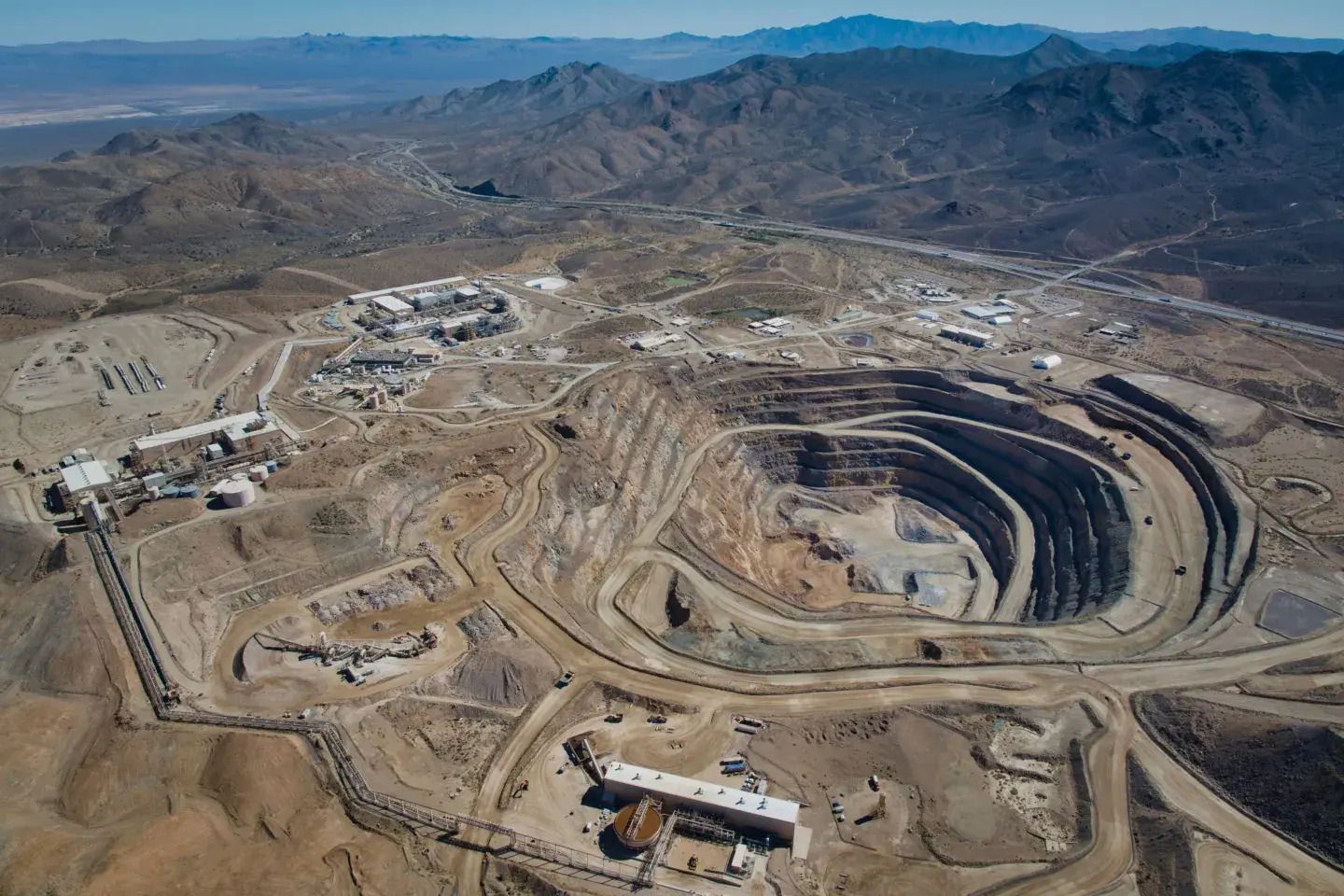
Mountain Pass (California), the only active REE mining and processing facility in the US. (Source: MP Materials)
Stability plays a key role in REE extraction projects. These projects need large investments, technologies, and long-term commitment. They also need a stable and secure place. The U.S.-Ukraine deal is a good example of that.
Any project in Ukraine would require:
Long-term peace,
Guarantee that Russia will not attack again in the future,
Reconstruction,
Infrastructures for the project: production sites, roads, railroads, bridges, etc.
Without guarantees, investors are unlikely to commit funds. Production sites could be seized or destroyed. Employees could be injured or kidnapped. Even if people and companies took that risk, insurance costs would be very high.
The production of REE also comes with heavy costs on nature and people’s health. It is therefore essential to develop safer production and recycling processes. These are additional costs to consider. Plus, some projects might be blocked due to protests because of these concerns. This already has been the case in Malaysia and Greenland.

Protests in Malaysia against REE refinery operated by the Australian rare-earths mining company Lynas. (Source: Reuters)
Environmental impact
REE production can harm both nature and human health. The process often involves the use of solvents to extract and refine them. They can create toxic waste that pollutes soil, water, and air. Some REE also contain radioactive elements. These must be removed with acids. Below are some examples of the problems linked to REE production.

(Source: Joy Pellet)
There is also a high risk for workers and people living close to production sites. Indeed, impacts on health include:
Lungs problems from dust and fumes,
Illnesses from contaminated water,
Radiation exposure,
Heavy metal poisoning.
There is a paradox around the use of REE. Though they are essential for clean energy they also come at a heavy cost. It is critical to develop recycling and stricter laws on processes.
Decoding geopolitics isn’t a job. It’s survival.
Joy