- GEOPOLITIKS
- Posts
- ISRAEL-IRAN: OPERATION “RISING LION” AND ITS CONSEQUENCES?
ISRAEL-IRAN: OPERATION “RISING LION” AND ITS CONSEQUENCES?
A Secret Strike, a Diplomatic Collapse, and the Fuse That Could Ignite the Next Middle East War—Here’s What Happens Now

Joy Pellet
June 16, 2025
On the night of June 13th, Israel launched an attack on Iran. The targets were nuclear installations, ballistic missiles bases, top leaders and nuclear scientists. The goal was to weaken Iran’s nuclear capabilities. In this article, we will look at the context of this escalation and what it could mean for the future.
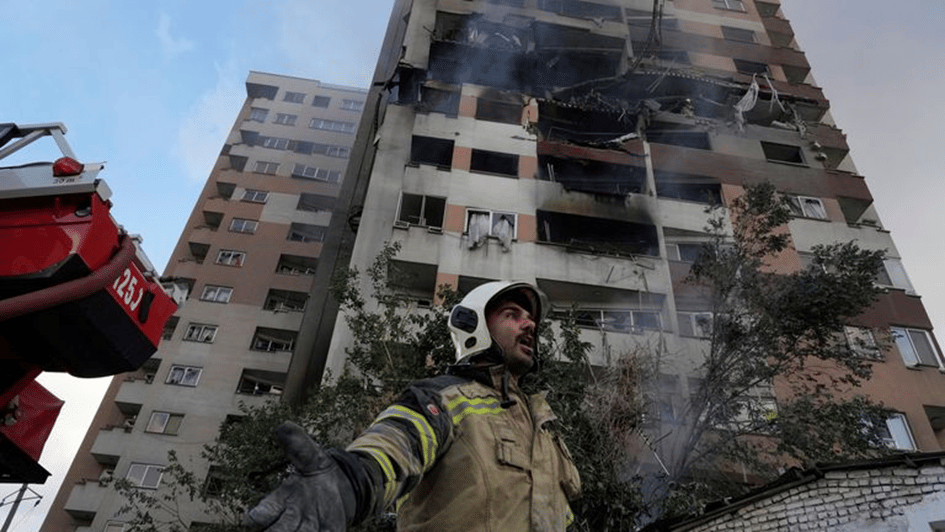
A firefighter in Tehran after Israeli attack (Source: Sky News)
Iran non-proliferation obligations
In 2015 Iran signed the Joint Comprehensive Plan of Action (JCPOA) in exchange of a lift on economic sanctions. Iran limited its nuclear capabilities to civilian purpose only and agreed to inspections by the International Atomic Energy Agency (IAEA).
On June 12th, the IAEA passed a resolution against Iran for breaching its obligations. This opened the way for a new round of sanctions. Board said Iran failed to answer on undeclared nuclear materials, stocks of enriched uranium and lacked cooperation with IAEA inspectors. Iran can now get to weapons-grade uranium (90% enrichment) within a week and make up to 10 nuclear weapons within months.
Iran condemned IAEA's decision and announced retaliatory measures. These include the launch of a new facility and a technological update.
Trump’s attempts for a new deal
After returning to office, President Trump initiated negotiations with Iran to reach a more restraining deal. His conditions were:
- Complete nuclear decommissioning,
- Accept enrichment by an international consortium,
- Make concessions on ballistic capabilities and regional diplomacy.
Iran officials say these terms are unacceptable. Their conditions are:
- keep the right to enrich uranium,
- sanctions lift.
In exchange, Iran would comply to inspections by the IAEA and a 3.67% enrichment limit.
Unlike Israeli officials, President Trump seeks a diplomatic resolution. He campaigned on reducing American interventionism abroad and plans to honor his electoral promise. In April, he gave Iran 60 days to settle on a deal. The next round of negotiations was planned on Sunday 15th in Oman. Following the attack by Israel, Iran withdrew from the negotiation process.
Israel’s strikes hard
The threat of an attack by Israel was growing the past few days. The U.S. even advised its nationals in the region to leave (non-essential embassy staff and deployed soldiers’ families). He probably dreads retaliation on American bases. Plus, some anti-UAV technologies supposed to be sent to Ukraine have been reoriented towards U.S. bases in the Middle East.
Finally, Israel launched its attack on June 13th, engaging 200 fighter jets.
The U.S. knew about the plan to attack, but the Secretary of State Marc Rubio said Israel acted alone, and that the U.S. were not involved. Still, Iran blames the U.S. and says they should face the consequences. They say President Trump agreed to the plan and did not try to stop it.
Trump may have hoped that Iran, feeling pressure, would accept the U.S. deal in the Oman talks. But that plan failed. Iran pulled out of the talks after the attack.
What to expect next?
Military level: retaliation will likely continue. Iran has already fired drones and missiles at Israel. But Iran’s allies in the region, like Hezbollah, Hamas, and the Houthis, are now weaker. Also, Syria has a new government, so Iran is more alone. Still, U.S. bases in the region are at risk, especially the one in Qatar, which is large and close, and those in Iraq where pro-Iran groups are active.
Economic level: the conflict already changed the markets and several industries stocks. There has been a rush into safe havens like gold and dollar and defense stocks are rising. Airlines and tourism companies suffered losses. Finally, the oil prices jumped almost 7% on June 13th. An escalation in the Middle East (key oil region) adds uncertainty on markets already pressured by President Trump’s tough trade policies. A war could hurt oil trade and global shipping.
Diplomatic level: The U.S. will likely stay close to Israel. But Iran has strong ties with Russia and China. China also buys a lot of oil from Iran. So, China will likely push for peace and quick talks to stop the fighting.
Decoding geopolitics isn’t a job. It’s survival.
Joy